
Loading…
Jumbo wrote:Cool. What's the outer dimension of your rims?
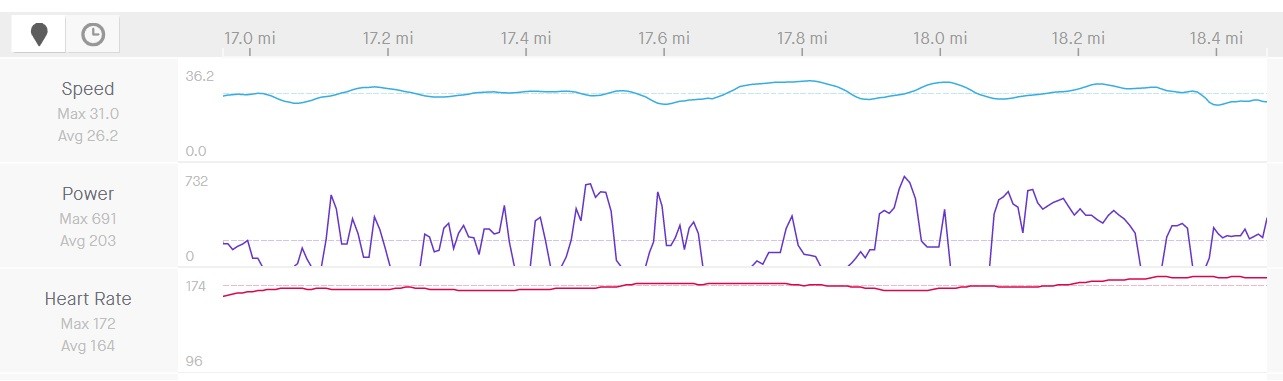
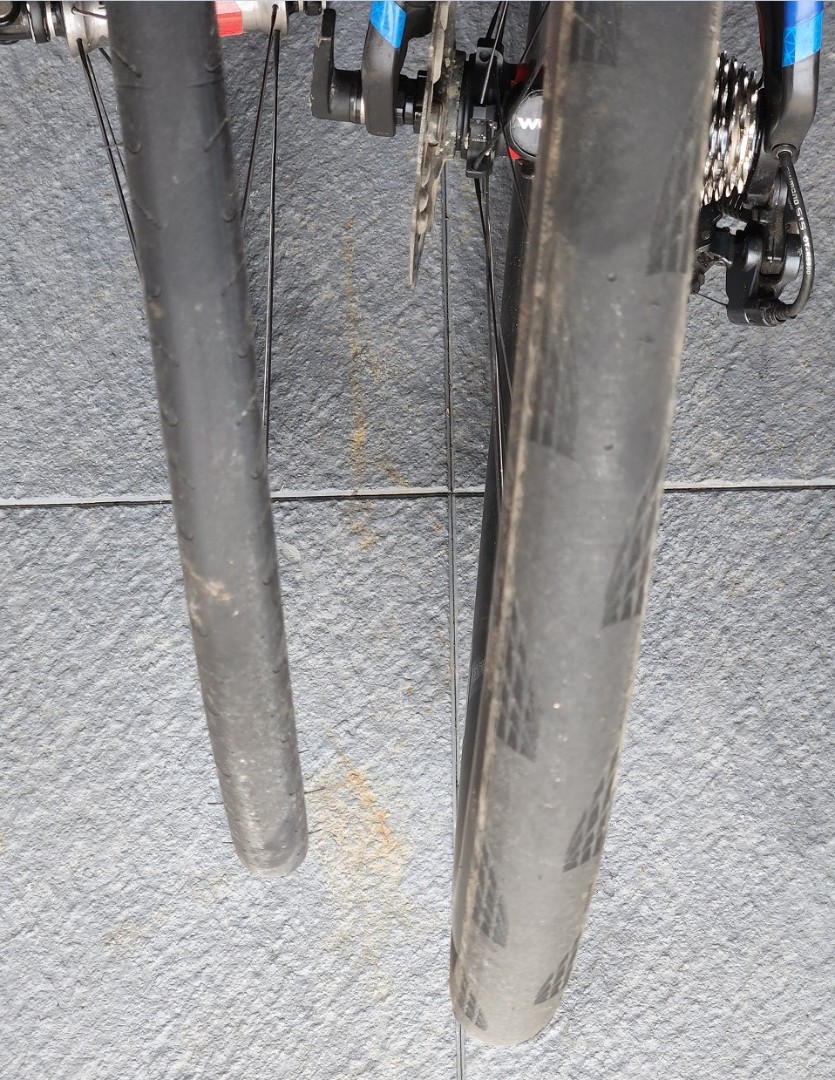
I don't want to be the fun police, but... Have you considered cornering and safety? When choosing my wheels I found a lot information about internal rim width and tire size, sometimes conflicting. A good guideline I found was that the ideal width should be around 60%, with 40% min and 80% max. For 700x32 that would be 12.8 min, 25.6 max, and 19.2 ideal.
Continental also says the recommend max for 32 is 25: https://www.conti-tyres.co.uk/tyre-rim-combinations
The concern isn’t for it blowing off the rim due to pressure. That test is meaningless for the particular failure mode to be concerned about here. The failure mode is in a turn (especially with LOW tire pressure) the sideways forces acting on the tire can cause the bead to jump over the edge of the rim and instantly deflate (blowout). That will lead to a nasty fall.
Yes, the risk is less with hooked rims than hookless, but hooked rims have always had this concern. Your latex strips are meaningless because latex that’s not contained by the tire bead seated against the rim will fail instantly under pressure.
Even if you test this safely somehow and there’s no failure, you will only have validated that exact (serial number, not model) rim and tire, because everything has tolerances and those tolerances have consequences. If you test the front wheel, you also have to test the rear. Test again if you replace the tire. Unless you get ahold of the worst case combination and test that, you don’t really know.
ERTO, being an engineering standard organization, has most likely tested those extremes. There’s confidence in what they say works does in fact work. Of course, that doesn’t mean anything outside the standards will fail, but it does mean you are taking on more risk the more you deviate from them.
If that risk is one you are willing to take, nobody is stopping you. But please don’t hand wave the risk when talking to others. And for the love of god don’t say there’s a safety factor of 3. I’m a mechanical engineer and I’m telling you there isn’t, not for the failure mode that’s relevant here.
chas wrote:Yep, good point. I'm aware that it is outside the ETRO specs. I run around 38 PSI, and it hold air comfortably at 90 PSI. 2x factor of safety there. Extra safety factors - rim is hooked, and I use "skinny stripper" latex strips that in effect make the tire a pseudo tubular tire - making burps next to impossible (and blowoffs more difficult). So that is 3 extra safety factors. But yeah, when one of the top consultants to world tour race teams tests the combo and uses it on his personal bike, I'm good.
Also, I would caution putting too much stock into your mysterious consultant’s opinions. Professionals do dumb or risky things personally or experimentally. That’s fine. Professionally putting your neck on the line and saying something is safe for use by your average consumer is a completely different thing.
Think experimental aircraft vs mass produced ones.
And knowing if said consultant is mainly an aerodynamics person or a tire product engineer is very important info. I wouldn’t trust the former to tell me what is safe, just what’s fast. I would trust the latter, but conditioned on them saying it’s been actually validated and intended for general use. Good luck with that.
Volsung wrote:I hope Nooge doesn't learn about fat bike folks purting 3.8s (97mm) on 100mm rims. I don't think I could handle that buzz kill.
People can do what they want. I just want to point out that there are real risks that were being misrepresented and misunderstood.
ERTO, being an engineering standard organization, has most likely tested those extremes. There’s confidence in what they say works does in fact work. Of course, that doesn’t mean anything outside the standards will fail, but it does mean you are taking on more risk the more you deviate from them.
The concern isn’t for it blowing off the rim due to pressure. That test is meaningless for the particular failure mode to be concerned about here. The failure mode is in a turn (especially with LOW tire pressure) the sideways forces acting on the tire can cause the bead to jump over the edge of the rim and instantly deflate (blowout). That will lead to a nasty fall.
I’m a mechanical engineer...
Nooge wrote:Your latex strips are meaningless because latex that’s not contained by the tire bead seated against the rim will fail instantly under pressure.
pushstart wrote:... Likely I'll run wider tires, though. I've got a set of 32mm Conti GP5kTR on order for the i25 LB wheelset I'm building now. That feels like it'll be a great combo, though I also run 28mm Conti GP5kTL on [hooked] i25 LB rims and haven't had any issues / they feel great ...I used the original GP5000 on 25 mm (inside) hooked rims for a while. They measured 34 mm wide at 50 psi with tubes. That combination was fast and handled well but was a bit harsh on bad surfaces. I like the 36 mm Strada Bianca better. Someday I'll try those on my 30 mm (inside) rims but I'm not sure why. Maybe Chas is making me crazy. 🙂