
Loading…
thumper88 wrote:[
Because car tires are run almost entirely on hard, smooth pavement. It’s as simple as that.

thumper88 wrote:Yes, there is a cult aspect to going wider and wider. On pavement it gets pretty silly. I ride with people now on 32mm road tires and frankly the pavement just isn’t rough enough to have that make sense. I’m not intererested in the cultspeak that’s out there about suppleness, I’m interested in hard data about what works.I ride regularly on pretty awful pavement with texture up to 2 cm which is worse than gravel because it's still hard. Also I'm riding just for recreation. Under those conditions a 35 mm tire is about the smallest which makes sense for me. A 34 mm Corsa N.EXT or 36 mm Strada Bianca Pro is a whole lot more comfortable than a 28 mm anything and any difference in speed is not enough to ruin my ride.
stu wrote:I ride regularly on pretty awful pavement with texture up to 2 cm which is worse than gravel because it's still hard. Also I'm riding just for recreation. Under those conditions a 35 mm tire is about the smallest which makes sense for me. A 34 mm Corsa N.EXT or 36 mm Strada Bianca Pro is a whole lot more comfortable than a 28 mm anything and any difference in speed is not enough to ruin my ride.
I've tried tires up to 48 mm and I agree there's a point beyond which bigger makes no sense on hard surfaces (on soft surfaces everything is different). Another consideration is it's hard to find road tires over 35 mm (though the SBP comes in 40 mm). The choices are mostly gravel tires with less puncture resistance or touring tires with more weight and/or rolling resistance.
thumper88 wrote:
But for purposes of talking here about the physics of tire size, we are of course trying to think about tires with identical construction but at different widths.
thumper88 wrote:
The subject here is what rough surfaces do to rolling resistance.
This fast-rolliing car tire stuff is applicable for a general discussion of the theory of tires on smooth or relatively smooth roads... but at some level of roughness as pavement skew towards chipseal, it doesn’t work and you have to go with less inflation pressure which requires wider tires.
barrows wrote:For road riding, and especially racing, the width limitation is going to come from aero factors. Even the most current, wider, deep section aero rims are only optimized for a 28 mm tire, so any tire wider than that is going to have an aero compromise, which is significant.
ccand51997 wrote:
Speedking at 25 psi is 19.1 with tube and old Black Chili. (Interpolating his other data, I would give it 2 watts for new Black Chili and 5 watts for tubeless {see his article about the old Raceking tubeless/latex/butyl}) so would guess about 12-13 watts.
This creates a speed hierarchy of this:
10w GP5 in 32mm/60 psi tubeless for rough roads and very light gravel
12-14 w Speedking at 55mm/25 psi for very rough roads, light gravel and sand (this is me)
16 w Raceking Protection at 55/25psi for sand/very rough gravel/light mtb
17w TS 35 for light to med gravel
19 w TS 40 for medium to rougher gravel
ccand51997 wrote:It would be nice if a company made a race tire in a really wide range of widths. The G-One Speed used to be such a tire, but with Addix Speedgrip, it is so slow now no one would care about the differences.One problem with all of those tires is tread puncture resistance, which according to BRR run from 42 (marginal) to 29 (nonexistent). Same problem with RH, depending on the casing those run from 48 to 33.
Conti's speedy tires don't do that, but you couId look at the following range of tires:
The new GP5000m TR in 32mm
Terra Speed in 35
Terra Speed in 40
Speedking which I use as a big road tire at 55mm
Raceking Protection at 55mm
thumper88 wrote:That all sounds totally reasonable. Roads here are unusually smooth other than some chipseal sections where I def can feel a difference in effort between 23mm and say 28mm.Here in Oakland CA we had too many years with insufficient road maintenance. Now that's getting better but busier roads are getting fixed first, as they should be. I don't like to ride on busy roads so I'm out of luck. I envy you, chipseal would be way better than our poorer roads.
Your roads sound terrible! but those larger sizes you’re using would make it tolerable for sure.

psi wrote:
No disagreement that wider tires are less aero and provide better suspension on really rough surfaces. My post was taking issue with notion that wider tires roll equally well on normal roads which seems to have become gospel in some corners as of late. The reason that is trotted out is that the wider shorter contact patch is better. However the latest source I posted basically completely demolishes that idea. The wider, (and larger) contact patch just encounters more road irregularities, and consequently loses more energy via hysterisis. At some point there is some crossover where the suspension losses from jolting around outweigh the losses from hysterisis, so running wider makes sense in these scenarios (chipseal, rough gravel). But on the road the small irregularities favour much narrower tires, which is why WT pros are sticking with < 30mm.
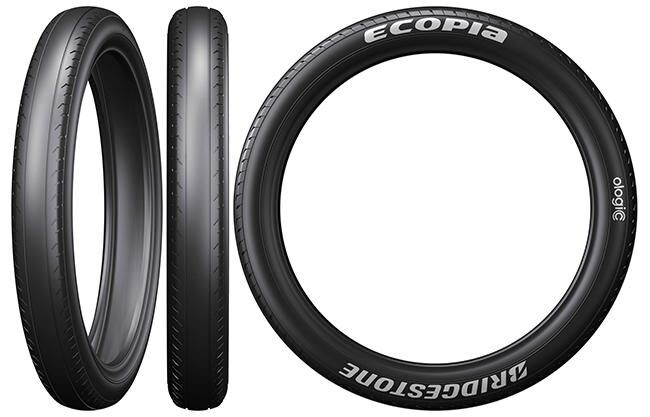
Here's a picture of the Bridgestone tire designed for solar power cars. Who are you going to trust, Rene Herse's engineering dept or Bridgestone's?
A quick note in a slightly different direction:
"Yes, a film of water on the road reduces rolling resistance. This is something that has been understood by time trialists for a long time."
Josh Poertner discussed this in his Marginal Gains podcast and suggested that they did look at (measure) rolling resistance of tires on wet roads and this suggestion from Zinn that it is faster is incorrect. (I also remembered reading this.) While there are some benefits (probably along these lines), he noted that if your tire is flinging water up into the air the energy wasted in that effort is more than outweighing any benefit water might be adding to the road surface.
With regards to this raging debate here :-) on width vs. contact patch size, I'd just note that the original proposition for going to wider tires on bikes was that the the contact patch shape was changing, but not the size. And the suggestion was that a wider patch offered less resistance. I take that last part with a grain of salt. I found this "mytth-busting" video to be a pretty good look at the physics and in the end reached the same conclusion that other studies (including BRR) found when they compared same tire (e.g. GP5000) in various widths: when comparing like-for-like pressures, rolling resistance will be the same.
Finally, I agree with the original assertion here that "wider = faster" can definitely be taken too far. I say this despite being notorious for riding fat tires on the road. These days I tend to show up to road group rides on my 44mm extra-light Snoqualmie Pass tires, because I'm without a dedicated road bike. And those tires roll fast. BRR suggests around 14w, which last I dug into this put them pretty close to a 32mm GP5000TR (the SPs also need to run a little higher pressure than BRR uses for their gravel tires, as the sidewalls are so thin). But while these tires feel very quick at low and moderate speeds, I definitely notice that they're more work when speeds get up into the 25+ mph range. And when I recently swapped in my new road wheels to test them out, the difference with a 30mm (still pretty wide!) GP5000TR is definitely noticeable (and measurable). The SP tires are amazing and fun tires (though the lack of flat protection maybe less amazing and certainly less fun) and I'll definitely keep riding them, but I don't harbor any illusions that they are going to roll faster on the road. All this said, I do appreciate voices like BQ (Jan Heine, really) prodding the industry to look at issues like tire hysteresis, vibration damping as it related to speed, etc. Sometimes the science gets stepped on, though, when there seems to be such a strong agenda -- or a marketing motive.
Volsung wrote:This thread got really long. Do I send in a postcard and ride my fat bike at next year's Giro D'Italia or not?
Tire width choice, like every other equipment decision in cycling, is a compromise trying to choose the best width/tread/pressure for the type of terrain and conditions you are going to encounter over the entire ride.... for something like Unbound this can be quite the challenge where your dealing with lots of hard-packed smooth and fast gravel, blown-out loose dry stuff, mud, square-edged water bars, and probably some mud. So the goal is to choose the best tire that will be good for most conditions.
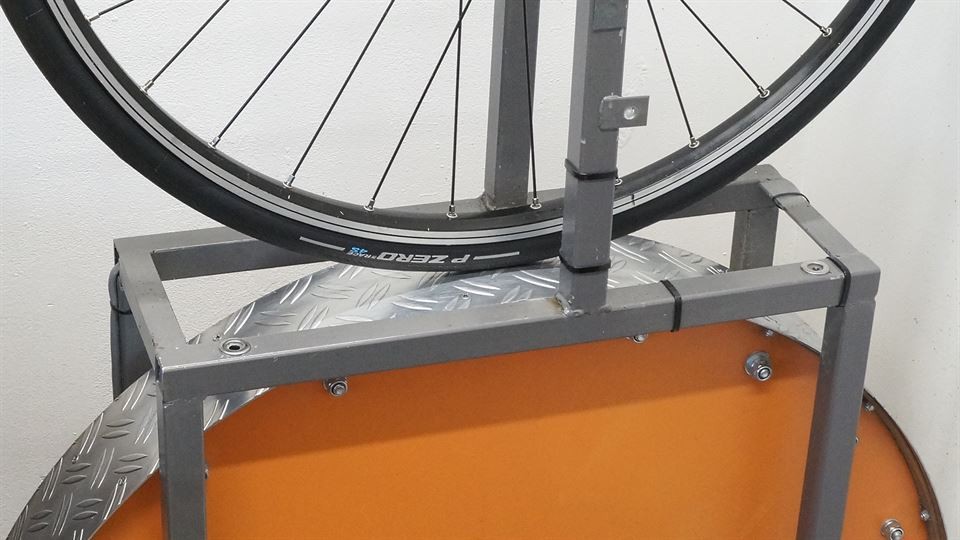
The problem with BRR is that they are doing the test on a smooth drum, so yes, that will give you a rolling resistance for "ideal" conditions, but when you're riding off road only a small portion of that is "ideal". Also, rolling resistance is just part of the equation, if your pressure is too high your energy is going vertically instead of propelling you forward, so running a wider tire at lower pressure will allow some deformation.
My understanding is that wider tires have the same rolling resistance at the same pressure as their narrower counter parts, but most people won't, or shouldn't be running the same pressure on a wider tire.
Here's a good article by René Herse on this subject... granted, they are not impartial. https://www.renehersecycles.com/why-wider-tires-are-not-slower/
My understanding is that wider tires have the same rolling resistance at the same pressure as their narrower counter parts, but most people won't, or shouldn't be running the same pressure on a wider tire.