
Loading…
smoothmoose wrote:
Wow...you running mullet on your gravel bike? Alleviate toe overlap?
Really hard to measure tires objectively in real world conditions. I'm just got my new wheelset....almost 700g lighter than my stock wheelset. Will first swap my GK over to see if the rotational mass thing is noticeable or not, before deciding on new rubber. If I don't really notice a difference - maybe I'll go with heavier rubber.
So, what do all these numbers mean? It means that when evaluating wheel performance, wheel aerodynamics are the most important, distantly followed by wheel mass. Wheel inertia effects in all cases are so small that they are arguably insignificant.
How can it be that wheel inertial forces are nearly insignificant, when the advertisements say that inertia is so important? Quite simply, inertial forces are a function of acceleration. In bike racing this peak acceleration is about .1 to .2 g’s and is generally only seen when beginning from an initial velocity of 0 (see criterium race data in Appendix D ). Furthermore, the 0.3kg/0.66lb difference in wheels, even if this mass is out at the rim, is so small compared to your body mass that the differences in wheel inertia will be unperceivable. Any difference in acceleration due to bicycle wheels that is claimed by your riding buddies is primarily due to cognitive dissonance, or the placebo effect (they paid a lot of money for the wheels so there must be some perceivable gain).
In summary, wheels account for almost 10% of the total power required to race your bike and the dominant factor in wheel performance is aerodynamics. Wheel mass is a second order effect (nearly 10 times less significant) and wheel inertia is a third order effect (nearly 100 times less significant).
Anyway, this is not to say that the performance gain is zero, it just is not very high. In the first chart, it is interesting that even on the uphill only portion of his ride, lowering the front and rear wheel mass by 50 percent only resulted in a 3/4 of a percent difference in the power needed to go the same speed. That is akin to having a decent 1500 g wheelset and going to a 750 gram wheelset. That is more or less the loss in mass that you have (700g). Over the course of the entire ride, it dropped to .33 of a percent or about 1/3 of a watt difference. That is why light wheels really don't matter.
Sorry, that was long.
bnystrom wrote:If you find that you can't feel a 700 gram (1.54 pound) difference in weight on your wheels, it really calls into question your ability to evaluate anything. The difference should be very obvious. Just sayin'...
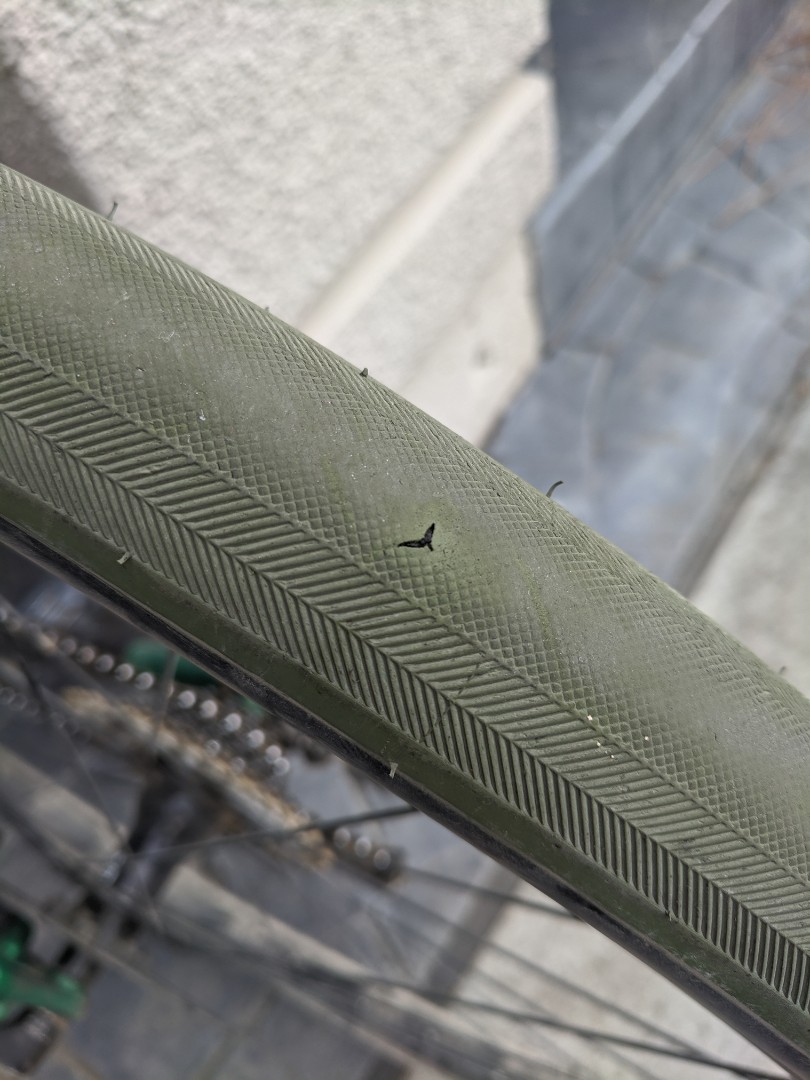
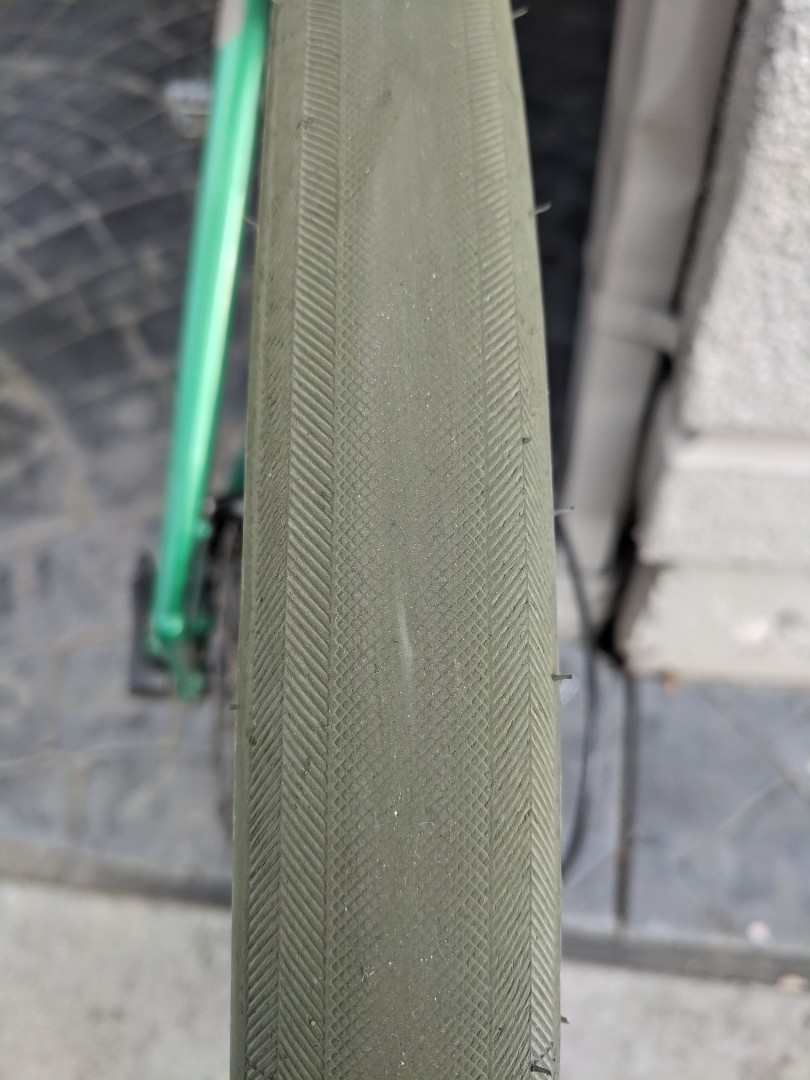
Masshoff wrote:GK Slicks in 38mm are just about the perfect year-round, all-purpose, fat roadie+ tire. Wide enough, light, supple, fast rolling, tough, easy tubeless setup, and conspicuously inexpensive compared to other brands. I have over 2000 miles on a set with minimal wear and only 1 puncture. Compass and WTB stop at 35mm, so no one else seems to be making anything comparable.
clarksonxc wrote:
Thank you. Thank you so much. Me (and to a lesser extent, Chas) were discussing a similar topic in another thread that I have been refraining from. The counter argument, from several folks on here, is that 1.54 pounds is a small fraction of the overall bike/rider system, and therefore an insignificant amount of weight. I have no response for someone who cannot feel this difference, and I have to assume they've never ridden a set of wheels that didn't come stock on a bike.
Bt50 wrote:I'm thinking/wondering the same thing!
How about the maxxis re-fuse? I'm leaning towards that over the gk (plus or not) slick.
Those are the same category tires right? Would one last longer and handle New Hampshire (cold, wet, windy, snowy, etc. ..) late-fall, winter, and early-spring (and colorado summer if they last that long) better?
Thanks
(Hopefully not a thread hijack!)
bnystrom wrote:While it's true that the change in weight is a small percentage of the total package, changes in rotating wheel weight - especially in the rims and tires - makes a huge difference in the responsiveness of a bike. Anyone who disputes this either doesn't ride much or they're just not very perceptive. Perhaps long-term roadies like me are just more sensitive to it that newer riders or those who come from the MTB side. Who knows?
chas wrote:
Could be that they are riding a lower power level where responsiveness doesn't play that big of a role? For someone riding a steady state or accelerating casually, it might not make that much of a difference..
Masshoff wrote:GK Slicks in 38mm are just about the perfect year-round, all-purpose, fat roadie+ tire. Wide enough, light, supple, fast rolling, tough, easy tubeless setup, and conspicuously inexpensive compared to other brands. I have over 2000 miles on a set with minimal wear and only 1 puncture. Compass and WTB stop at 35mm, so no one else seems to be making anything comparable.
Dino wrote:
Good to know. I sold one of my road bikes with the idea that I would use my new gravel bike as a back-up road bike (with a second wheel set and 28mm road tires). But now I'm thinking 32mm and tubeless.
I have 32mm Compass Stampede Pass on my gravel bike for road duty. They are great. I have run the 35mm Bon Jon pas for 3000km, and I also put my 28mm tyres on for a week to compare. I think 32mm is a great size, still turns into corners pretty fast, and makes for a comfy ride.
For commutes and solo training, I tend to take the gravel bike with 32's over the road bike with 28's. For fast group rides I take the roadie with 28mm tyres and 50mm deep wheels to try and hang onto the fast guys.
Masshoff wrote:GK Slicks in 38mm are just about the perfect year-round, all-purpose, fat roadie+ tire. Wide enough, light, supple, fast rolling, tough, easy tubeless setup, and conspicuously inexpensive compared to other brands. I have over 2000 miles on a set with minimal wear and only 1 puncture. Compass and WTB stop at 35mm, so no one else seems to be making anything comparable.My observation on our tandem has been vastly different. The soft rubber of the GK picked up glass which eventually worked it's way through the protection belts and punctured the tubes. I lost count of the number of flats, maybe 7 or 8???
NoCoGreg wrote:
That said, I just saw Panaracer came out with new GK+ slick and SK+ models so hopefully these will perform better as I really did like the feel of the GK.
Dino wrote:
Good to know. I sold one of my road bikes with the idea that I would use my new gravel bike as a back-up road bike (with a second wheel set and 28mm road tires). But now I'm thinking 32mm and tubeless.